Plan the finish your customer wants first, then turn it into cushion, tint and shade specifications an OEM partner can actually quote.
01 · Outcome FirstWhy product planning should be the first step when launching a Korean makeup brand: define the desired outcome for your customers first
When a founder launches a new Korean makeup brand, or when a professional makeup artist wants to create their Own private label, they will inevitably begin by thinking about which products to manufacture, not which results the customer is looking for. This approach allows suppliers to define the product features and finishes on their Own terms, resulting in brands ending up with inventory that is not well suited to local market conditions.
Consumers look for a Finish, not a product
The Search intent for “Korean makeup products” falls under b2c informational (moderate confidence). The top Result for that term is an article providing guidance on the subject. Google’s AI Overview responds to the query “key characteristics” of Korean makeup by listing: a base tone of glass skin; gradient lips; aegyo sal highlighting; and high-placed blush. Related searches, like “Korean makeup products,” and “best Korean makeup,” suggest that consumers are researching and comparing options during the consideration phase. Rather than being interested in “one cushion,” what consumers are picturing is “light, hydrated, radiant skin.” That desired outcome is also the description that brand owners and professionals should include in the first paragraph of an OEM contract.
Rather than being interested in “one cushion,” what consumers are picturing is “light, hydrated, radiant skin.”
On search intent
The desired outcome determines the specification
Once a Finish is defined, texture, Coverage and Shade range narrow automatically.
- Light, hydrated, radiant skin: lightweight cushions or bb creams instead of thick matte bases. Cushion foundations and bb creams must apply in thin layers, retain glow on areas of the face where you have natural shine (high points), and stay set around the nose. An example of an expected Shade range would be something similar to #19c to #43n (benchmark for TIRTIR mask fit red cushion).
- Gradient lips: water tints, Glossy Tints and lip oils that allow the color to focus on the area of the mouth. Scale wise, the NOONI lip oil has 24.8K amazon.com.au reviews; it is the highest rated beauty product in that country. ETUDE Dear Darling Water Tint has 15.2k amazon.com.au reviews. These statistics show just how large the interest in “hydrated tint” results are.
- Aegyo sal highlighting and high blush: cream blush balms and multi-stick highlighters – meaning products that stick to and blend.
Write specifications for the desired outcome into the OEM contract
Writing the Finish desired by customers into a clear format provides manufacturers with measurable items to work off of. Therefore, instead of writing “a light cushion”, write “semi-matte glow. Thin buildable layers. 12 or more shades including cool and neutral Undertones”. By doing so, manufacturers will know exactly what to propose as an exact formula and MOQ. Pricing tier is another Item for manufacturers to determine based on packaging specifications and branding position (and therefore should remain as a separate Item toward the end of the contract so as not confuse other specifications).
There are gaps left in competing content
There are currently limited types of content available in top Search results. Most articles fall under consumer review and marketplace listing categories. While these articles provide some information regarding Shade-range comparisons, Middle East and GCC skin tones, and hot humid climates; halal or vegan certifications; and wholesale, OEM and private-label sourcing are unrepresented in those results. Limited Shade-ranges are reported as complaints by international buyers however no actual quantities were reported. That gap is what the brand owner needs to capitalize upon: provide specifications for Shade-counts, certifications and climate-durability within the OEM contract with the Finish customers desire and the product will answer many questions that editorial guides cannot.
This principle is broken down by Finish below using the corresponding product type, formula specification and Shade-data as OEM contract items.
02 · Glass Skin BaseFinish 1 – glass skin base: choosing cushion foundations & bb creams, primes and defining Shade ranges
Formula-wise defining a glass skin base is straightforward: lightweight cushion foundation and bb creams that enhance or preserve your skins natural radiance vs heavy matte Coverage with setting only on oily regions such as around the nose. During the planning stages this Finish will divide into three product types.
Cushion foundation (base sku)
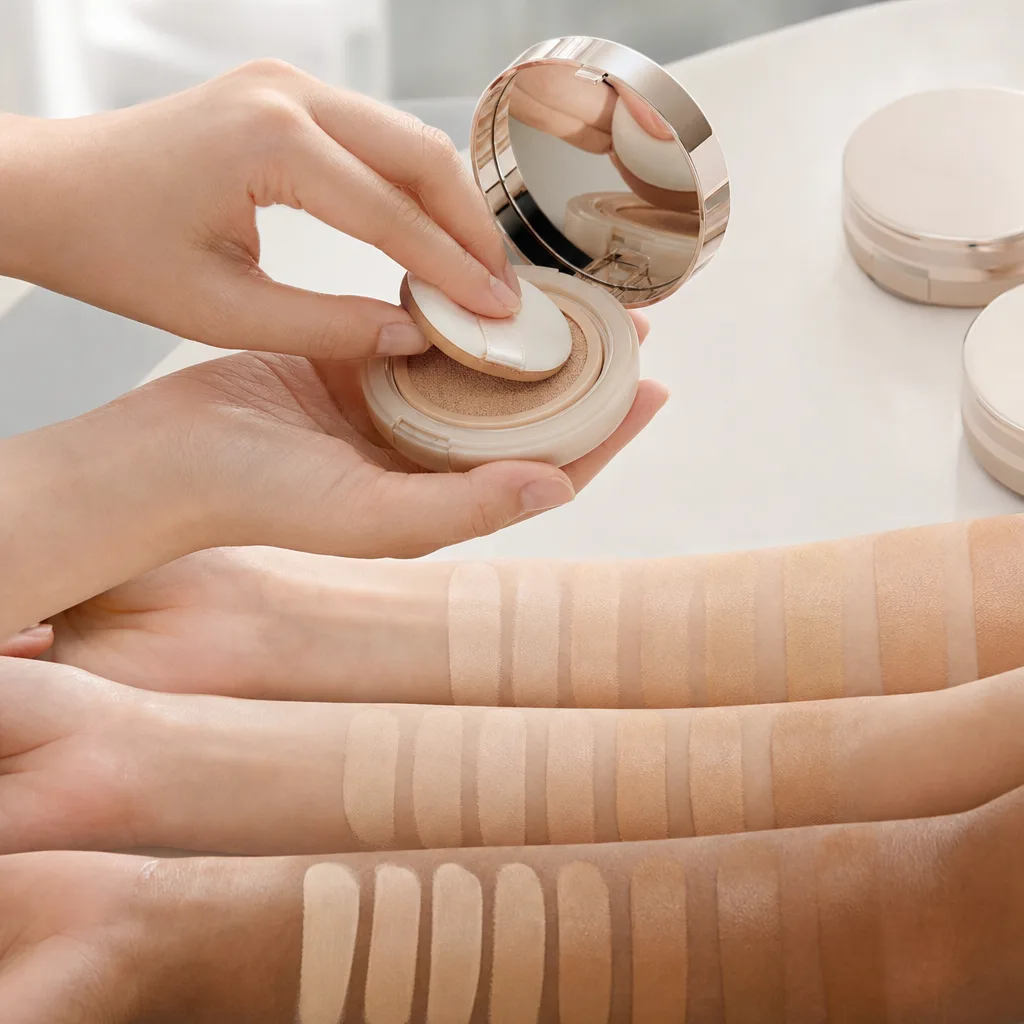
Market benchmark is TIRTIR mask fit red cushion, an amazon's Choice on Amazon Australia with 7.9k reviews. Selling for aud $26.50 (list price = $34.00), or approximately usd $25 in usa. The Finish of TIRTIR mask fit red cushion is a semi-matte glow, ideal for a GCC climate that requires both glow and Wear. Key OEM contract items:
- Coverage: medium, buildable to nearly full with 2 layers.
- Finish: satin glow (state gloss level on dewy/satin/ semi-matte scale).
- spf: spf 50 + pa++++ (pro lines use spf 50 as standard, i.e., Jung Saem Mool skin Nuder Cushion).
- Wear: transfer resistant 12 hours above 70% humidity (request testing above 70%).
- puff: rubycell or aircell; state if one refill included.
bb cream/skin tint
Supportive sku for customers desiring bare skin results with less Coverage than a cushion. Sticking to one cushion during launch while pushing bb to round two reduces your exposure to inventory risk.
Blur prime
Positioned similarly to innisfree no-sebum Blur Primer, Blur primes manage oiliness while blurring pores. In hot markets it will serve as your supporting sku determining how long your base lasts; and may be bundeled with the cushion.
Shade range design: biggest headache international buyers report
As reviewed multiple times by consumers, k-cushions have very limited Shade ranges. TIRTIR addressed this limitation by increasing the Depth of colors from #19c petal to #43n deep cocoa. As mentioned previously, this represents the exact basis for its overseas marketplace success. Recommended launch structure for private brands:
| Item | Min recomendation | Notes |
|---|---|---|
| Count of shadings | 12 to 16 | Leave enough room to add 6 after initial launch |
| Depth scale | 17 to 45 (retain Korean numbering) | Allows global customers to cross reference against TIRTIR numbers |
| Undertones | c (cool), n (neutral), w (warm) | Add more mid-tones warm/natural in Middle East/south asia countries |
| Testing | Photos of swatches on 10 or more real models | Creates an Experience signal via self photography |
03 · Gradient LipsFinish 2 – gradient lips and lip texture spectrum: developing water tints, Glossy Tints, lip oils & Multi-Sticks
Next to creating a base for customers, the next Result consumers are seeking is a center focused gradient lip. Creating a gradient effect centered on the inside lip and fading outwards can not be done with one product alone. It is accomplished through combining various products along a texture spectrum. The brand owner must determine which segment of that spectrum to occupy.
The lip texture spectrum (lightest to heaviest)
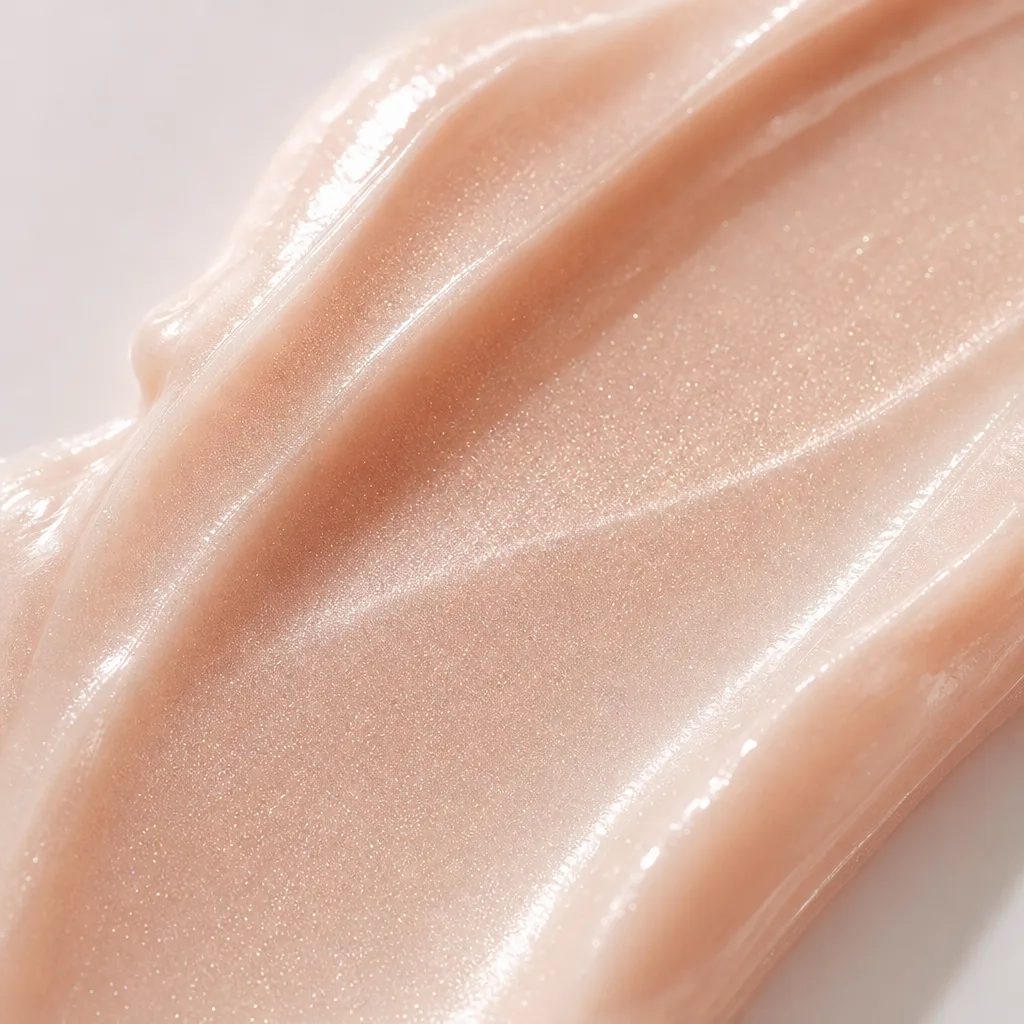
Water tint. Starting point for gradient lips; most popular k-lip category. ETUDE Dear Darling Water Tint sales on amazon au @ aud$15.00 (list price $16.06); 15.2k reviews; over 100 units sold last month; makes it the benchmark for entry price point. OEM spec brief: water soluble dye stain sets onto skin after dry time window of approximately 10 to 15 seconds for edge blending (instant setting means gradient effect not possible).
Glossy tint/melting balm. Rom&nd Glasting melting Lip Balm positioning (e.g. No.06 Kaya Fig; No.12 Veiled Rose): MLBB type tint and glossy balm. OEM spec brief: oil-wax balance provides approximately two to three hours of gloss; pigment load approximately 60 to 70 percent of a water tint; confirm if claims supporting moisturization (hyaluronic acid/ceramide) are supportable.
Lip oil. Highest rated category in the united states and australia (NOONI Korean lip oil – 24.8K reviews); clearly defined winter demand for layering over tints. OEM spec brief: tinted plumping (consider low-irritation alternatives to menthol or peppermint for GCC market); viscosity does not run but has no clumps; apple-berry fruit scent.
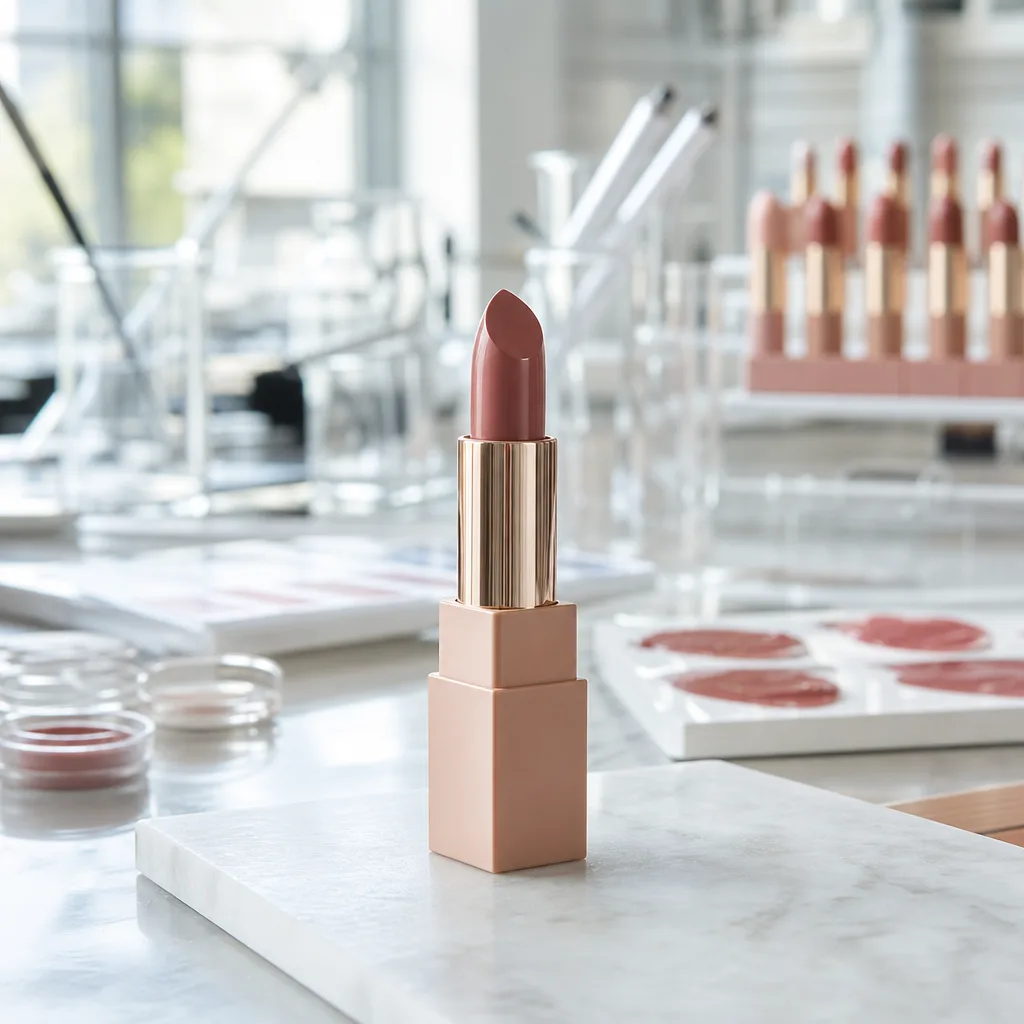
Lipstick (bullet). Mid-priced bullet-type sticks with editorial positioning such as 3CE mysty lip bear pink scheme lipstick (@ $26.63 aud); designed specifically for full lips rather than gradient effects; thus lower priority in a first launch.
Lip & cheek multi-stick. Multi-use sku handles lips and cheeks in one product. Examples include JOAH Crystal Glow tinted Luminizer Stick which include highlighter/bronzer functions in product. Suitable strategy of fewer SKUs with higher set value.
Planning point – ingredient and certification requirements based on markets
04 · The Manufacturing BriefHow to write the manufacturing brief: a finish spec template for OEM and private label partners
To be able to write a manufacturing brief with specifications, we need to use what was established during our planning process. We have determined:
- Finish (e.g., satin-glow, creamy-smooth, etc.)
- Product Group(s): Cushion foundation, Tint, Brow, Lip, etc.
- Shades: Which colors will appear on packaging? What is the number of shades? How will shades be labeled? (ex. C/N/W – Cool/Neutral/Warm) Will there be a specific naming convention (e.g. a reference shade)?
- Price Tier: Is the product being positioned as a Budget offering ($15-$30), Mid-range ($20-$35), or a Premium product ($35+).
Writing the Brief
Each of these decisions becomes a field in the brief used to guide OEM/private label manufacturers’ development of your product’s formula. Each missing piece of information increases the rounds of revision to quotes. In the case of the UAE, Saudi Arabia, and Global markets (all primarily English-speaking) using an English language brief is preferred. As a result, the below template utilizes English field names.
10 Field Brief Template
1. Product Overview
One sentence describing the product (product type, desired finish, intended user/customer). Example: “Cushion Foundation/Satin-Glow Finish/GCC Women aged 20-40, humid climate.”
2. Formula Specs
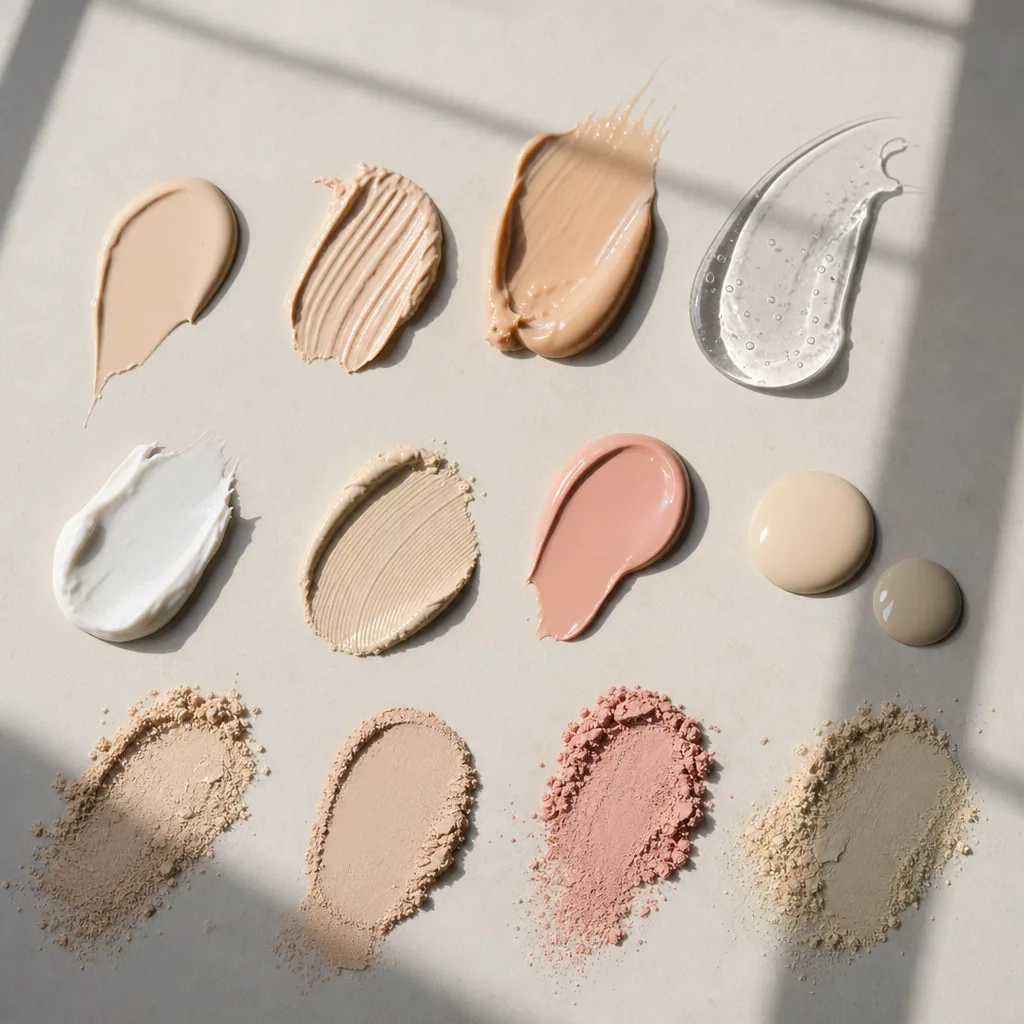
- Texture: Dewy, Satin, Semi-Matte (choose one)
- Coverage: Sheer, Medium, Full (and if buildable)
- Hours of wear + Transfer Test Conditions + Humidity + Sebum Resistance Test Conditions
- Required SPF/PA Rating + Type of UV Filters (Organic vs. Inorganic)
- Any required ingredients to avoid (carmine, denatured alcohol, certain fragrance allergens, etc.)
3. Shade Plan
- Number of shades planned for production
- Depth numbering system (i.e. 1-12, 1-9, etc.)
- Distribution of cool/neutral/warm undertones across shades
- First versus Second Production Split (if applicable)
4. Reference Products
Describe which attribute of this product you want the OEM/Private label manufacturer to replicate. Do not describe "this product" itself. Example: “Glow Level similar to TIRTIR Mask Fit Red/Coverage 1 step higher/Shade Range to #43N”
5. Certifications & Compliance
The next step after establishing how your product will differ from existing ones is determining a price tier for your product. The first step in doing this is to understand the current competitive landscape for korean makeup products. Competitors' prices were found using online retailers that allow customers to sort products by price. Examples include Amazon Australia and Lazada. Products ranged in price from approximately $AUD 11 to over $AUD 140. However, while the resulting table illustrates a broad price spectrum for korean makeup products, it does not provide insight into how customers perceive those different price points. Without knowing how consumers perceive those price ranges, creating a viable marketing strategy would require substantial research into consumer perception of value and willingness-to-pay. Below are examples of how to create three tiers based on publicly available data and general knowledge about korean beauty pricing psychology. These three tiers were chosen because they represent a typical progression of growth for a brand in terms of pricing power and perceived quality by the consumer.
Creating a Pricing Strategy Using Three Tiers
- Tier I – Budget: Entering this space requires companies to compete solely on volume. Due to the high Minimum Order Quantity (MOQ) and advertising costs involved in entering this segment at scale, this tier should be avoided unless absolutely necessary.
- Tier II – Mid-Tier: This represents the greatest concentration of demand for korean beauty products. Psychological anchors (USD 25 for a cushion, USD 15 for a tint) already exist within this tier which allows us to keep Customer Persuasion Costs (the amount of money spent persuading customers to buy your product) low. By adding features unique to the GCC region (halal certification, heat stable formulations, expanded shade options), we are able to differentiate ourselves at parity pricing.
- Tier III – Premium: Brands entering this tier rely heavily on their Makeup Artist Brand Ambassadors to drive interest in their products. Price is typically only supported when coupled with clear specification justification (SPF 50+, full coverage, reusable/refillable systems etc.).
By adding features unique to the GCC region (halal certification, heat stable formulations, expanded shade options), we are able to differentiate ourselves at parity pricing.
On mid-tier positioning
6. Packaging
What are your options for containers (e.g., cushion 15g, tint 4–5ml)? Will you offer refills? Are you using existing tooling or creating new molds? How will you print the labels? What secondary packaging options do you have? First launches typically use the standard manufacturer packaging (the largest cost driver and longest lead time factor) then add differentiation through label and cap color.
7. MOQ & Target COGS
What is your desired minimum order quantity (MOQ) for each sku and by color? What is your target price for each product (retail divided by 4-5)? Which Incoterms would you like to apply (FOB / EXW)?
8. Sample Request
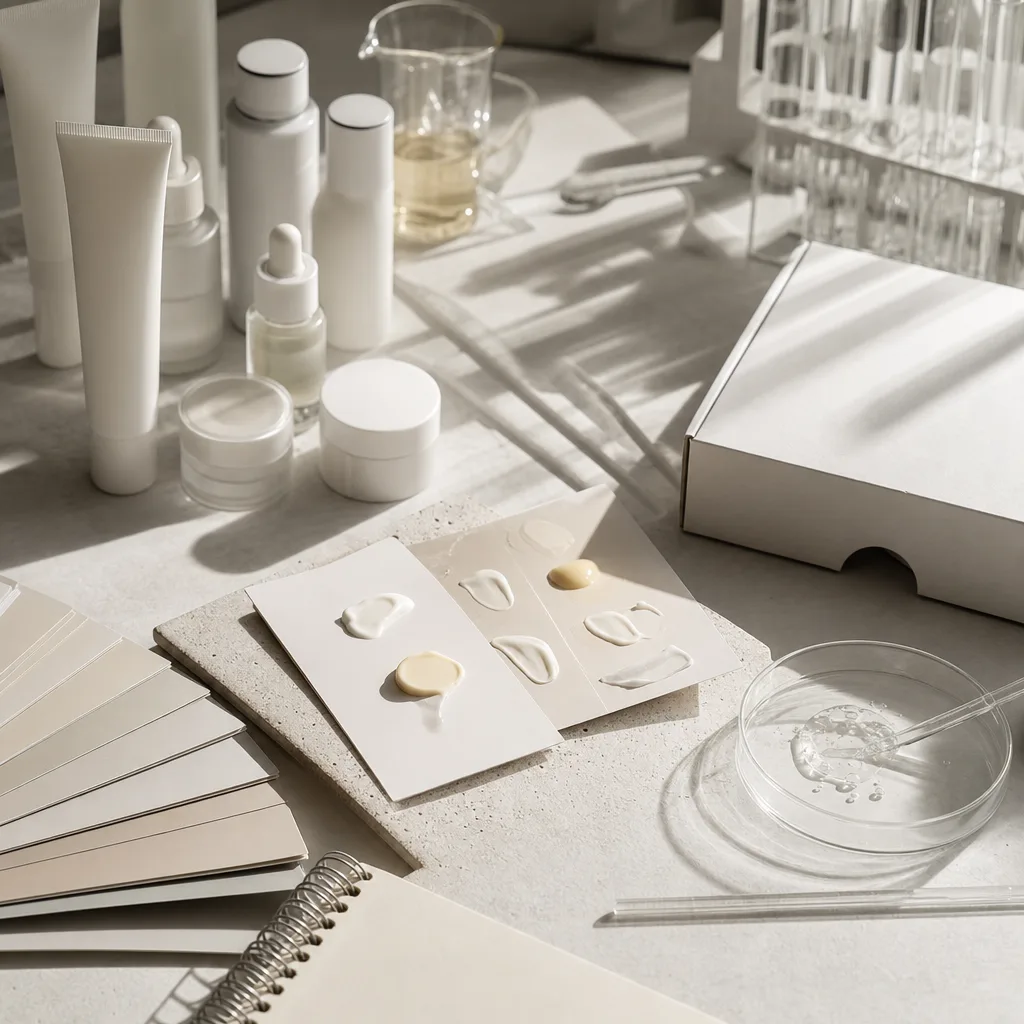
- Lab samples: submit 3 colors (representative of your range) in quantities of 10-15 grams
- Number of feedback rounds: limit to a max of two-three
- Be clear about how much you'll pay for samples and how long they'll take
- Include a scorecard to assess texture, payoff, wear, scent and usability of the container (1-5)
9. Timeline
Write down deadlines for:
- When you expect to receive sample approval
- When you complete the required accelerated testing (usually 3 months)
- When certifications and registrations are completed
- When products will be manufactured
- When products will ship
Work backward from the expected launch date and assign specific deadlines for all stages.
10. Brand Assets
Submit logo, color and font files. Send a rough version of the claim copy. Create a plan for how you want to photograph the workspace and sample testing process. Taking photos of the workspace and sample testing process yourself provides an experiential indicator to customers when published on-site.
Developing a new Korean makeup brand begins by identifying what outcome your customer is looking for and then converting that desired outcome into clear product specs (finish, texture, color range, packaging, etc.) The end goal of these specifications should be an integrated "brief" that a manufacturer could use as a reference guide when determining if it will be feasible to produce or sample from. By establishing these specifications at the beginning of product development, you will minimize the number of unneeded changes during the development phase and ensure that your products align with your target audience. If you are a brand owner who wants to go beyond conceptualization and have a solid plan developed into an actionable development brief, we at Kbeauty Production can assist in coordinating the entire process and provide access to suitable manufacturers in Korea.