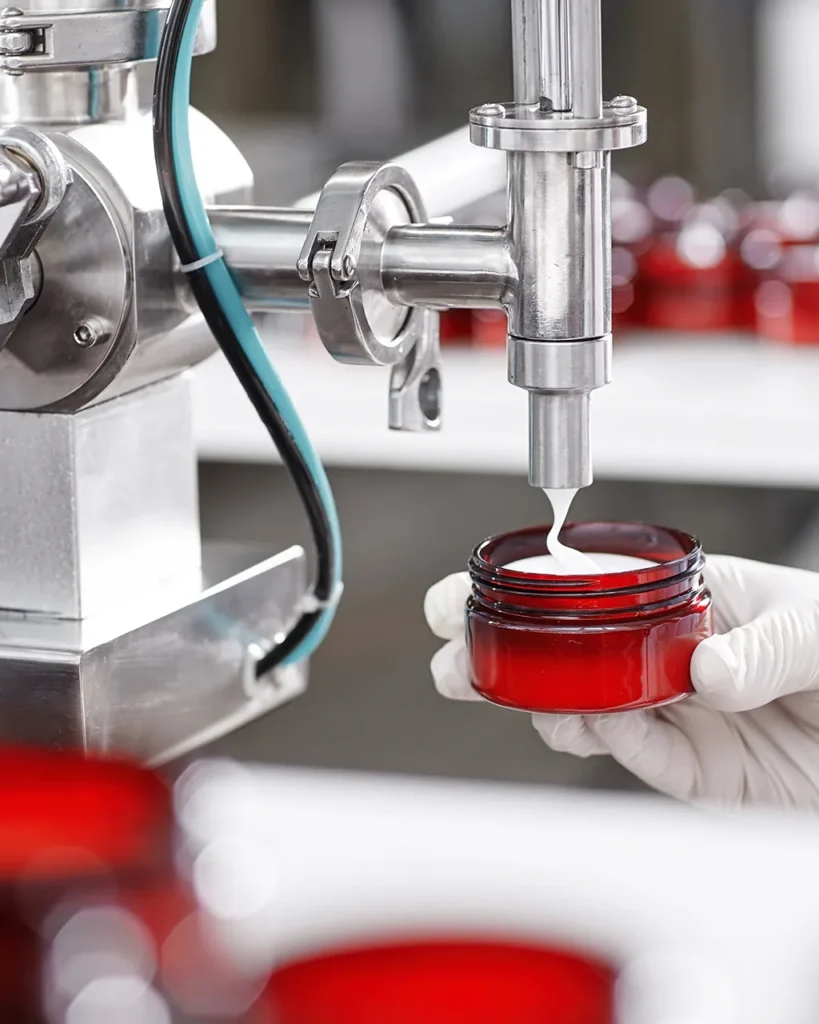
The idea of launching in Korea with a Korean cosmetics manufacturer is appealing to many beauty and cosmetics brands from Saudi Arabia and the Gulf Cooperation Council (GCC) for a number of compelling reasons. Korean manufacturers have earned a reputation for innovative and effective formulations, for trendy and timely product launches, and for excellent OEM/ODM capabilities that allow brands to get their product to market quickly and efficiently. However, as the conversation progresses into the serious stages, one major concern invariably arises:
What is my MOQ?
Your Minimum Order Quantity (MOQ) is one of the most significant aspects of any manufacturing project in Korea. It impacts your overall investment, your packaging options, your inventory planning, your launch timeline, and ultimately, your profit margins. Yet, it is perhaps the least understood topic among all new and emerging brands. From our experience as a Korea-based agency working with Saudi and GCC-based clients, many buyers believe MOQ is simply something the factory chooses. In fact, MOQ is typically the result of production economics. It is determined by the formula batch size, packaging supplier requirements, filling line configuration, labor, raw materials, and the minimum commercial viability of the project.
We frequently see this misconception arise with our Saudi-based team during conversations with clients regarding OEM/ODM cosmetic projects in Korea. Clients will often ask for a small quantity to reduce risk. We understand this sentiment; especially at the launch phase. However, even though the factory may agree to manufacture a smaller quantity, the price reduction may not be commensurate. The majority of this disparity occurs on the formula side. Many times, the factory still adheres to the same commercial considerations as the original MOQ since the setup work associated with the project will still be essentially the same.
Therefore, understanding how MOQ works in Korea is not just beneficial to your success. It is imperative.
There is no single MOQ for every cosmetic project in Korea
Another key point for brands to comprehend is that there is no universal MOQ for every cosmetic project in Korea. MOQ will vary depending on the nature of the product, how customized the product is, the type of packaging used, and the organization and structure of the factory.
Practically speaking, MOQ is typically impacted by the following factors:
* Minimum workable batch size for the formula
* Raw material purchasing quantities
* Packaging component production minimums
* Filling and assembly line setup
* Labor and quality control costs
* Printing, decoration, and labeling requirements
* The factory’s margin and minimum profitability
Thus, MOQ is not merely a matter of how many units a client wishes to purchase. It is whether the factory can efficiently manufacture the order.
For Saudi and GCC-based companies seeking private label cosmetics Korea, Korean skincare manufacturer, or Korean makeup manufacturer, planning ahead is crucial. Projects with basic formulas and stock packaging may have significantly different MOQ structures than projects with custom formulas, special packaging, and multiple shades.
Why formula MOQ is so important
Formula MOQ is usually where many first-time buyers encounter the largest surprise.
When a factory manufactures a skincare or makeup formula, the process is more than just combining ingredients. The factory must prepare the batch, manage the mixing conditions, conduct internal testing, configure the equipment for the next step of filling and packing, and clean the equipment. Regardless of whether the quantity is large or small, most of these tasks still occur.
As such, formula factories generally resist making orders too low, especially for custom formulas.
From our experience with Saudi and GCC clients, this is often the most misunderstood area. Buyers may believe that reducing the quantity will decrease the total production cost. However, in many instances, the formula side of the project still bears the same setup burden. Therefore, the factory may agree to a smaller quantity, but the cost may remain comparable to what the original MOQ would incur.
Additionally, this issue is compounded when the client desires a custom product, as opposed to utilizing an existing standard formula. If a client requests a unique texture, active ingredient direction, custom shade, product claim, or more specialized product concept, the factory’s workload increases. The project goes beyond mere manufacturing. It now includes development, evaluation, sampling, and compatibility assessments as well as coordinating internally. Thus, custom formula projects are usually accompanied by either a greater MOQ expectation or a production cost that seems excessive despite the reduced order volume.
As such, this presents an important lesson for developing brands:
Lower quantity does not necessarily equate to lower cost in a meaningful manner.
Formula quantity is determined by factory economics, not solely client preferences
New brands typically initiate with a desired quantity based on their financial situation. They may desire to produce 1,000 or 2,000 units per SKU as a way to reduce risk. While this makes sense from a commercial standpoint. Factories generally operate under a different perspective.
A factory is not only asking, “How many units does the client wish to buy?” It is asking:
* Can this quantity be processed efficiently on the current equipment?
* Can the required materials be purchased without waste or inefficiency?
* Can the filling line be set up, run, and cleaned at this volume without causing a loss?
* Can the quality control and internal documentation processes continue to function at this level?
As such, MOQ is often defined by production economics rather than customer comfort.
For Saudi and GCC-based companies that plan to utilize a Korean cosmetics manufacturer for manufacturing skincare, makeup, sunscreens, ampoules, cushion products, or foundations, it is critical to recognize that each type of product will have its own manufacturing realities. MOQ is not only categorized by the type of product. It is categorized by the actual process behind the product.
Packaging MOQ: standard package vs. custom package
Whereas MOQ for the formula side of a project is determined by batch economics. MOQ for packaging is largely determined by packaging component production minimums and packaging supplier rules.
At this juncture, many Saudi and GCC buyers begin to see the distinction between standard packaging and custom packaging.
Standard packaging
Standard packaging refers to choosing a bottle, jar, tube, compact, etc. that currently exists within the packaging supplier’s catalog. The mold already exists, the manufacturing process has already been developed, and the packaging aspect of the project does not need to establish a completely new structure for the project.
Due to this factor, standard packaging is usually less risky and less costly to implement.
This is one of the primary reasons we often advocate for standard packaging for initial-launch stage brands. Standard packaging enables the client to advance at a faster pace, reduces the upfront burden, and minimizes the unnecessary costs prior to establishing whether the product resonates in the marketplace.
For Saudi and GCC clients that are entering OEM/ODM cosmetics in Korea for the first time, this is often the best option. The brand can focus on bringing the correct product to the marketplace without prematurely investing in high-cost packaging options.
Custom packaging
Custom packaging is a completely different scenario.
Once a client desires a custom bottle, exclusive component, special cap, unique mold, custom color, premium decoration, or distinctively constructed design, the complexity of the project increases. The packaging aspect of the project is not only producing the component, it is also developing it.
Therefore, the packaging aspect of a custom packaging project will always increase the MOQ and/or increase the total production costs.
Therefore, we normally suggest to our clients not to over-design packaging in the first place unless the brand is already established or the expected volume can clearly support it.
Recommendations for Saudi and GCC-based brands
One of the most practical recommendations we provide to our clients is simple:
Use the same bottle or component for multiple SKUs and change the label instead of changing the entire package.
This is especially valuable in makeup projects, particularly when there are multiple shades. Instead of designing a separate package for each variation, it is normally much more efficient to maintain the same component and differentiate via labels, stickers, outer boxes, or shade indicators. This method maximizes the packaging order while minimizing the potential for having unused packaging.
From our experience, packaging suppliers typically initiate from larger quantities than most buyers initially anticipate. When a client splits the packaging order across multiple variations, a portion of the packaging may go unused for a considerable period of time. The brand then has to bear another cost, often overlooked at the beginning: storage.
We have witnessed this occur numerous times. A new brand wants packaging variety to make the line appear more premium or more comprehensive. Later, some of the packaging will move slowly and create additional pressure on the warehouses and tied-up capital for the brand.
That is why, especially for start-up and early-stage brands, we normally recommend:
- begin with standard packaging
- keep packaging choices simple
- when feasible, utilize one bottle or component across more than one SKU
- instead of modifying the entire package, modify the label
- first focus on finding the product-market fit, and not on achieving the greatest degree of customization
This approach typically decreases stress, enhances stock efficiency, and develops a healthier launch structure.
Why Factories Request MOQ
Factories do not request MOQ to make the project more complicated. Factories request MOQ because production involves fixed costs.
Prior to filling any product, the factory may expend resources in the form of time spent on planning, sourcing, setting up the production line, coordinating internally, and managing quality. If the order is too small, the factory may expend almost the same amount of resources to fill the order as they would to produce a larger quantity of product.
That is why MOQ was created. It helps preserve manufacturing efficiency.
For the buyer, the primary take away is this: the objective should not always be to find the absolute lowest MOQ. The better objective is to design a project structure that is commercially viable.
A lower MOQ may seem like a great deal, however, if it results in higher unit costs, wasted packaging, slow moving inventory, and additional storage expense, then it may not be the best decision after all.
Smart Way to Approach Korean Cosmetics Manufacturing
Saudi and GCC companies seeking to manufacture cosmetics in Korea either through private label cosmetics Korea or OEM/ODM cosmetics in Korea, will typically achieve success by approaching the project with discipline rather than over-customizing.
- Strong launch strategies are typically built around:
- Focused product range
- Standard packaging wherever possible
- Manageable formula complexity
- Controlled shade expansion
- Efficient inventory planning
- Lower storage expense
Once the brand demonstrates sufficient demand, it is significantly easier to transition to custom packaging, additional shades, and more specialized formulation options.
This is the difference between launching creatively and launching sustainably.
Final Thought
MOQs in Korea are not arbitrary. They represent how actual manufacturing operates.
Formula MOQs are determined by batch size, amount of work required to develop the formula, and production set-up. Packaging MOQs are based on whether components are standardized or customized, the number of different packaging types being produced, and the production efficiency of the packaging operation.
For Saudi and GCC beauty brands, the smartest approach is almost never to try to customize every aspect of your product from day one. What is smart is to establish a launch strategy that is both efficient, flexible and commercial.
Therefore, when working with our clients, we often suggest starting their cosmetic product lines off with standard packaging, streamlining the number of SKUs, and using one bottle for multiple products (when possible), particularly in makeup shade related projects. This will help minimize waste, eliminate unnecessary storage costs, and make the project feasible during its initial phase.
What determines success is not only to purchase less; what determines success is to buy smarter.
Planning to Manufacture Your Beauty Brand in Korea?
We provide practical support for Saudi and GCC brands in navigating the Korean OEM / ODM manufacturing process through formula development, packaging options, MOQ (minimum order quantity) planning and communication with suppliers. If you’re about to launch a new skincare or makeup product line, we can assist you in developing an efficient and smart manufacturing strategy from day one.