K-Beauty Has Become a Serious Opportunity for Wholesale in the Gulf Region
South Korea’s cosmetic exports have grown by a record 10.2 billion dollars in 2024 and then rose to 11.43 billion in 2025, indicating that K-beauty has moved beyond the status of a fad to become an export engine globally. Beautyworld Saudi Arabia 2025 was attended by more than 450 exhibitors from over 40 countries and attracted more than 15,000 visitors; demonstrating how rapidly Saudi Arabia is becoming a center for the international beauty industry.
How did Korean beauty wholesale become such a significant area for the Gulf region?
Culture and industry structure have driven K-beauty to grow globally and domestically. K-beauty products were able to expand internationally as a result of the Korean Wave (also referred to as Hallyu), while the Korean government invested heavily in developing and building the nation’s product development and manufacturing capacity.
As indicated by official Korean government sources and InvestKorea, Korea has developed its own cosmetics manufacturing technology and has served as a testing ground for the development of K-beauty products. Additionally, official Korean government sources indicate that K-beauty is popular globally and has a high level of purchase intention, similar to other Korean cultural exports. Therefore, K-beauty products were able to move into the Gulf region due to their visibility and substantial value.
Why did Korean beauty products perform particularly well in the Gulf region?
The Gulf region is one of the most rapidly growing beauty regions globally and buyers are becoming increasingly sophisticated. The GCC is among the world’s most rapidly growing beauty markets, according to KOTRA, and Saudi Arabia’s beauty industry has benefited from population growth, increasing income levels, increased tourism and increased consumer spending, as outlined by Saudi Ministry of Commerce. According to Chalhoub Group, the GCC personal luxury market reached USD $12.8 billion in 2024, representing a 6% increase over last year, and the overall MENA beauty and personal care market is estimated to reach USD $60 billion.
Why do GCC customers prefer Korean beauty products?
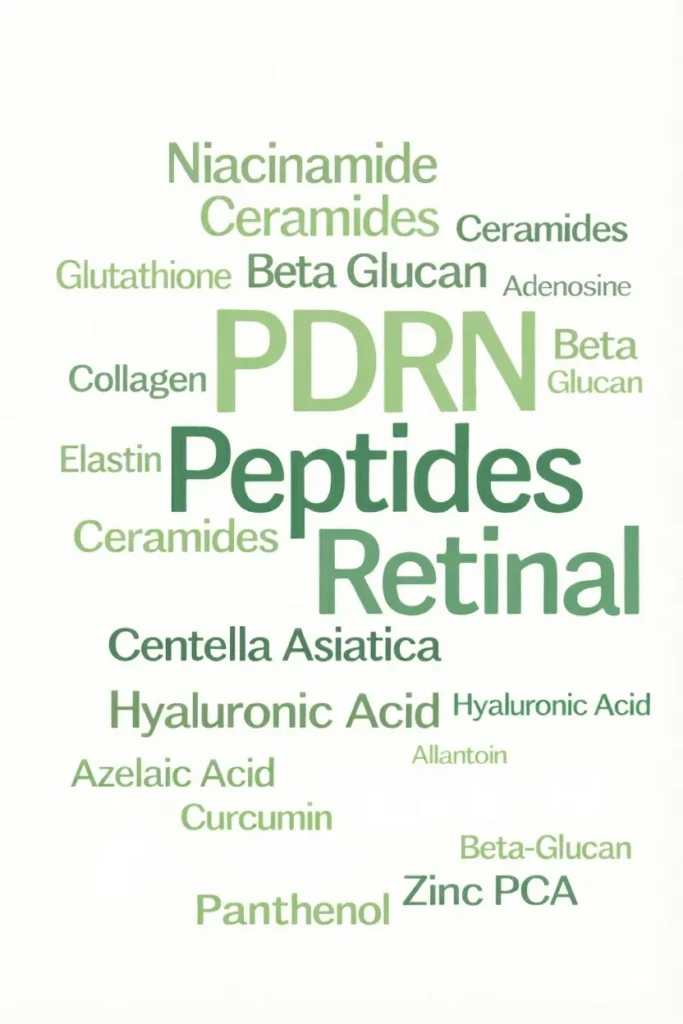
GCC customers are interested in more than just the brand name when considering K-beauty products. They appreciate the product experience itself. Korean beauty products were able to establish themselves based on their innovative product lines, frequent product launches, beautiful textures and their focus on ingredients as a way of telling a story. Retailers in the United States, such as Ulta and Target, describe K-beauty as innovative, gentle, hydrating, and focused on skincare routines. KOTRA’s UAE Market Analysis indicates that Gulf consumers are focusing on ingredients, self-care, natural/organic positioning, and halal-related purchasing behaviors. Those characteristics align well with the GCC customer, who wants visible results from beauty products, but also wants comfort, trust and to know that the formulas will be comfortable to use every day.
Based on our experience in the GCC market, K-beauty products connect emotionally with Gulf customers primarily through these product experiences and characteristics. Customers are no longer requesting “Korean Skincare.” They are asking for specific hero ingredients, lighter textures, better sun protection, soothing products for stressed skin, and brands with a clear story. We have observed how quickly buyers move from country of origin to product rationale: Why this formula, Why this texture, Why this brand, and Why now, in all of the exhibits, sourcing meetings and discussions with GCC clients we have engaged with.
This is why some Korean brands are successful for years and others rapidly emerge as leaders before disappearing completely. Long-term success in wholesale is not achieved solely by trendiness. Success is achieved through continuous hero products, quality control, educating the end-user about the products, maintaining discipline with retailers, and defining a brand position. KOTRA’s Dubai Market Reporting indicates that Middle Eastern consumers are shifting away from simply chasing trends and are beginning to pay more attention to the philosophy of the brand, sustainability, quality, and technology. This bodes well for serious brands and serious wholesalers.
One of the largest issues in Korean beauty wholesale is poor channel control. From our experience in the market, many brands are able to quickly achieve global recognition, however, they soon lose credibility and fail in the market because they do not maintain control over market pricing. Brands often sell to too many buyers, do not manage their distributor territories effectively, and allow price competition to diminish the price of their products. As a result, the official distributor typically is the party that invests in the market, while other parties dump their inventory at discounted prices. The consequence of this is obvious: margins decrease, trust decreases, and long-term growth is nearly impossible.
Gray-market sales and counterfeits exacerbate the issue. While this may seem like speculation, data exists to prove this is not just a theory. The OECD and EUIPO report that the total volume of global trade in counterfeit goods was 467 billion dollars and identify online platforms and small-parcel trade as two of the largest challenges to enforcement efforts. Their 2025 findings also indicate that China and Hong Kong were the primary source economies of counterfeit goods seized during trade. That explains why brand authentication and controlled distribution have become critical issues in the beauty space.
There are already indications that Korean beauty brands are responding. Beauty of Joseon maintains a list of authorized retailers in each country, including Saudi Arabia, Bahrain, Kuwait, Qatar and the UAE. COSRX informs consumers that it cannot confirm the quality of products purchased outside of official channels, and includes documentation to verify production history. Round Lab also advises consumers to be aware of prices that are significantly lower than usual, and to verify authorized resellers. These are not minor considerations. They represent an indication of a more mature marketplace.
Therefore, the recommendations we provide to customers is to work with brands that defend their market price, support authentic distribution and recognize the importance of the distributor’s role. A healthy brand requires a healthy distributor. When both parties are able to maintain a reasonable margin, both parties are able to invest and grow, and ultimately build a long-term relationship.
Korean beauty brands and hero products performing well in the GCC
There are a number of brands that consistently appear on GCC retail shelves, in distributor meetings and in buyer inquiries today. Among those brands are:
Laneige continues to excel in the GCC market, because hydration is a key theme in its messaging. Sephora describes Laneige as a hydration-based K-beauty brand, and its Lip Sleeping Mask is a hero product that has gained widespread acclaim for providing intense, overnight hydration. Brands that are able to communicate a clear, repeatable benefit to their customers tend to thrive in the Gulf region.
COSRX continues to excel in the GCC market, due to the clarity of its messaging and the trust that it builds with customers. COSRX positions its Advanced Snail 96 Mucin Power Essence as a barrier-enhancing, glow-promoting best seller and is also widely available in Watsons Saudi Arabia. COSRX is the type of brand that benefits from clear, problem-solution communications.
Beauty of Joseon became known for its blend of traditional heritage messaging with modern skincare performance. The brand now has authorized retailers in Saudi Arabia and the UAE and its Relief Sun line is currently being sold in Watsons Saudi Arabia. Its appeal is straightforward: elegant packaging, compelling story, and everyday-wearable formulas.
Anua is emerging as a viable competitor in the GCC market, due to its soothing, ingredient-driven brand identity. Watsons Saudi Arabia sells Anua’s Heartleaf 77% Soothing Toner and related products, and Ulta describes the toner as a product that soothes, tones, and hydrates. That type of calm, skin-barrier-focused positioning tends to resonate with many GCC customers.
SKIN1004 is another brand that is well-positioned for the GCC market, as it offers calming, lightweight skincare that centers around centella. Watsons Saudi Arabia sells SKIN1004, and the company’s Hyalu-Cica and Centella product lines are positioned as moisturizers and soothing products for sensitive skin. Both of those characteristics are attractive to GCC customers looking for hot-weather, sensitive skin-friendly products.
Some By Mi continues to attract customers in the GCC market, because it established its brand around solving specific problems with skincare, particularly exfoliation and acne care. Watsons Saudi Arabia sells Some By Mi’s Miracle line, which is described as a line of products that produce smoother, clearer skin. Many wholesale customers view that type of “Visible Problem = Visible Solution” message as commercially appealing.
Next Wave of Korean Beauty Brands Likely to Gain Momentum in the GCC
Looking at where the U.S. beauty market is headed, there are a number of Korean beauty brands that could potentially gain traction in the GCC market in the near future.
AESTURA is the most obvious example. Sephora describes AESTURA as a dermocosmetic K-beauty brand for sensitive skin, and its ATOBARRIER365 Cream is positioned around barrier repair using ceramides and niacinamide. That type of clinically-grounded yet accessible messaging tends to travel well globally.
Hanyul has a strong chance of gaining traction in the GCC market, because it combines a rich history of Korean heritage with modern messaging around hydration. Sephora identifies Hanyul as a K-beauty brand tied to the concept of “glass skin,” and its Red Rice line is positioned around ceramide-based hydration.
Biodance appears to be poised for gains in the GCC market, as Sephora has positioned it as a science-based brand with claims to improve barriers, pores and glow, particularly through its collagen mask franchise. That type of hero-product model tends to scale quickly in the Gulf region.
Torriden also appears to be a strong candidate for gains in the GCC market, as Sephora has emphasized Torriden as a clean hydration brand. Sephora describes Torriden as an iconic, best-selling K-beauty skincare brand, and its DIVE IN line is positioned around hyaluronic acid hydration and skin comfort.
Haruharu Wonder is also worthy of consideration, as Target recently launched Haruharu Wonder as part of its growing K-beauty initiative in the U.S. Haruharu Wonder’s Black Rice line is already generating significant purchase activity on Target.com. That type of accessible, routine-friendly brand typically translates well to GCC e-commerce and brick-and-mortar retail.
FINAL TAKEAWAY
The reasons for Korean beauty wholesale reaching Saudi Arabia and the GCC are both market driven. On one hand, there has been an abundance of innovation from Korean products that meet the desires of the young, trend-focused consumer who focuses on their skin care. However, the next major level of success for Korean Beauty in the Gulf will be achieved by brands that have not only gone viral but also have the ability to provide stability, defend price point, block fake sales channels, support legitimate distributorships, and establish long-term credibility. The main distinction is that being a viral sensation is very different than being a successful, enduring business.
Are you looking for a good, reliable Korean beauty wholesaler?
We are a wholesaler that helps companies in Saudi Arabia & the Gulf Cooperation Council (GCC) find authentic Korean skincare and cosmetics brands through reputable wholesalers, to provide them with consistent pricing and long-term business success.